
Shop by category
Buy Pain Relief Online Australia
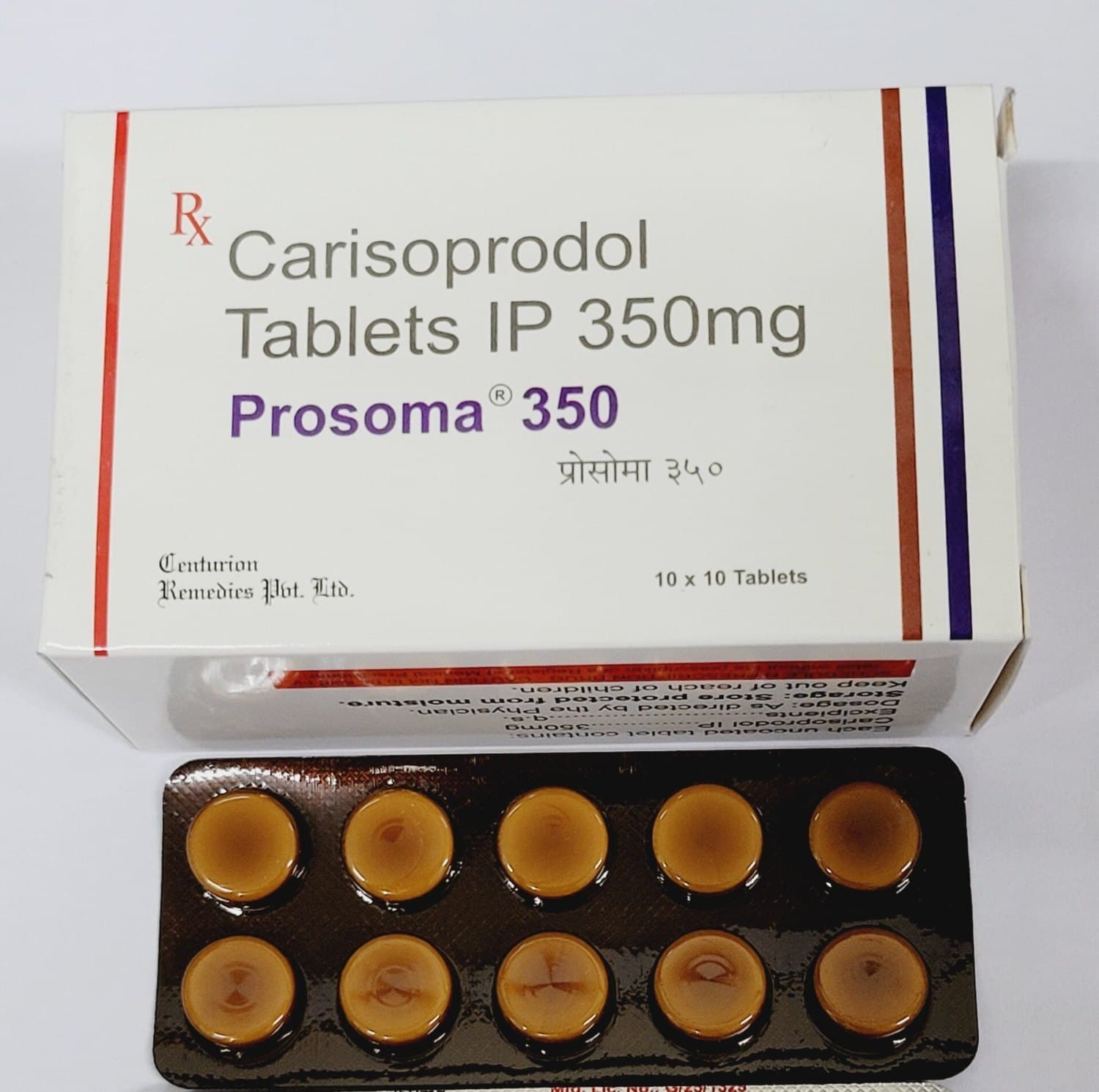
Carisoprodol is a centrally-acting muscle relaxant for short-term relief of acute muscular pain, available here as generic Pain-O-Soma and Prosoma tablets.
4 productsCarisoprodolMuscle relaxants Free over $150
Centrally-acting muscle relaxants based on carisoprodol, sold under the Pain-O-Soma and Prosoma names. Carisoprodol is used for the discomfort of acute, painful musculoskeletal conditions — typically back strain, shoulder injury or post-injury spasm — as a short-term adjunct to rest, movement and physiotherapy, not as a treatment for long-standing pain. It is a prescription medicine with a recognised potential for dependence, and it is not among the muscle relaxants routinely prescribed in Australia. Read the patient information leaflet and speak to a doctor or pharmacist before use.
Pain Relief products
Pain Relief In stock
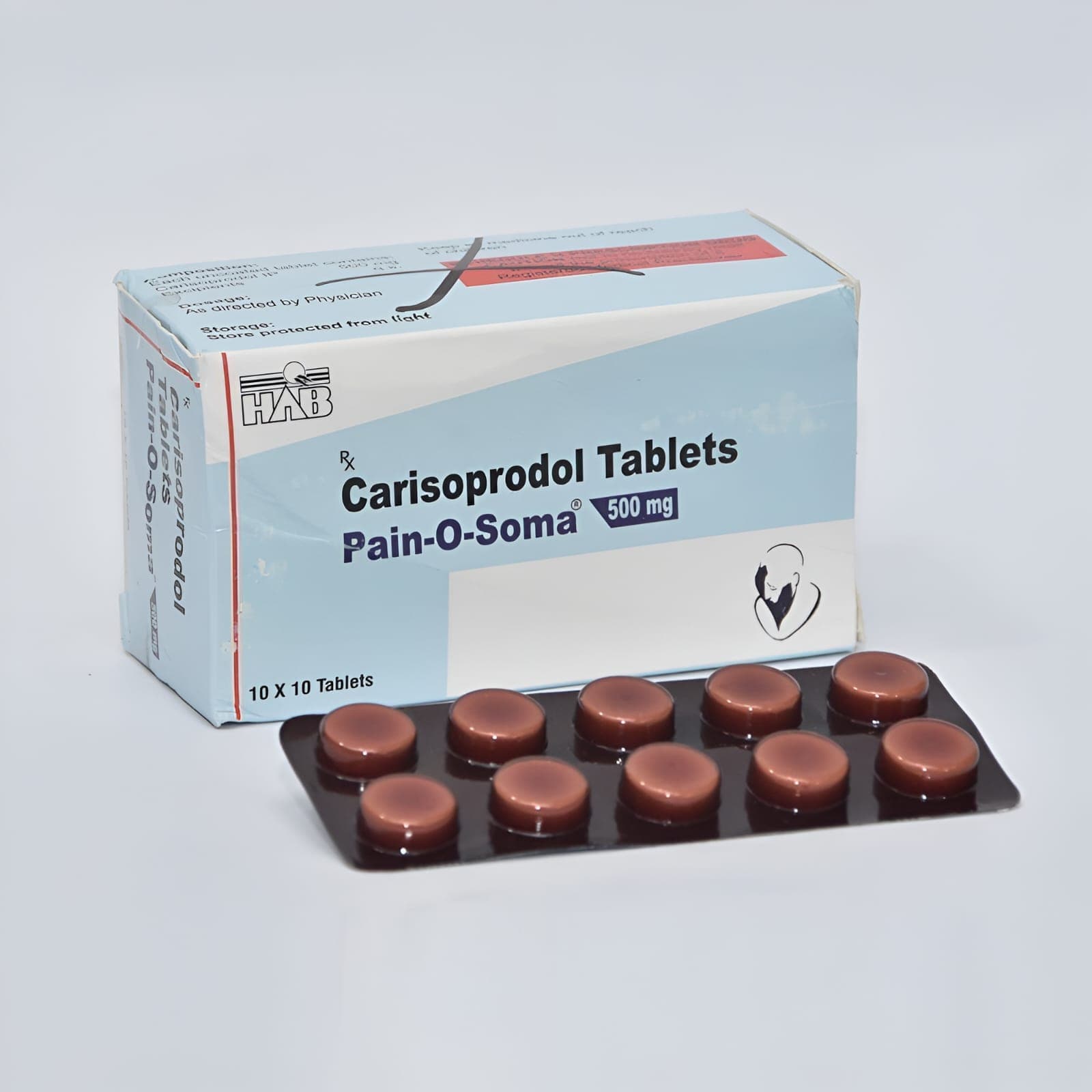
Pain-O-Soma 500mg — Carisoprodol Tablets
Carisoprodol 24h dispatch
From
View$104.55
About Pain Relief
Reviewed by the Kamagra AUS Pharmacy Team on 5 September 2026 · Next review June 2027
Key facts
- Carisoprodol is a centrally-acting muscle relaxant used for short courses in acute musculoskeletal pain.
- It is sedating, it has recognised dependence potential, and it should never be combined with alcohol, opioids or other sedatives.
- It is not among the muscle relaxants routinely prescribed in Australia — check the ARTG and speak to an Australian prescriber first.
- Australian guidance for acute back pain leads with staying active, heat and simple analgesia, with physiotherapy where needed.
- Red-flag symptoms — loss of bladder or bowel control, saddle numbness, progressive weakness, fever — need urgent assessment, not a muscle relaxant.
- Every product in this range contains the same active ingredient; labelled strength is a prescriber's decision.
Acute musculoskeletal pain is the everyday kind: a back that seizes up after lifting, a strained shoulder, a neck that will not turn after an awkward night. It is extremely common, it is usually self-limiting, and the evidence-based Australian approach leans heavily on staying active within your limits, gentle movement, heat, and time — with medicines playing a supporting role rather than a leading one. Healthdirect Australia publishes consumer guidance on managing back pain, and it puts movement and reassurance ahead of medication.
Carisoprodol belongs to a group described as centrally-acting muscle relaxants. Unlike a topical rub or an anti-inflammatory, it does not act directly on the muscle fibres or on inflammation at the site of injury. It acts within the central nervous system, and its main metabolite is meprobamate, a sedative agent. The practical consequence is that its effects are sedating — which is part of why it eases the perception of muscle discomfort, and also why it causes drowsiness and why it should never be combined with other sedating substances.
That mechanism is also the source of its main problem. Because it produces sedative effects and is metabolised to meprobamate, carisoprodol has a recognised potential for misuse and dependence, and withdrawal symptoms have been documented after prolonged use. This is why it is treated as a short-course medicine in every jurisdiction where it is available, and why regulators in several markets have restricted or withdrawn it. In Australia it is not one of the muscle relaxants commonly prescribed; before ordering, check the current registration status of any product on the Australian Register of Therapeutic Goods and discuss it with an Australian prescriber, who may well suggest a different approach entirely.
There are alternatives your prescriber may prefer, and it is worth knowing they exist. Simple analgesics and anti-inflammatories, topical preparations, heat, graded activity, physiotherapy and — for pain that persists — a structured pain management programme all sit in the same problem space. For pain lasting more than a few weeks, Australian guidance moves firmly away from sedating medicines and towards active rehabilitation, because the risk profile of long-term sedative use is poor and the benefit is limited.
It also matters to recognise the situations where pain is not a simple strain. Back pain accompanied by loss of bladder or bowel control, numbness around the groin or inner thighs, progressive leg weakness, unexplained weight loss, fever, or pain following significant trauma needs urgent assessment rather than a muscle relaxant. These are sometimes called red flags, and they are the reason a medicine bought online is never a substitute for someone examining you.
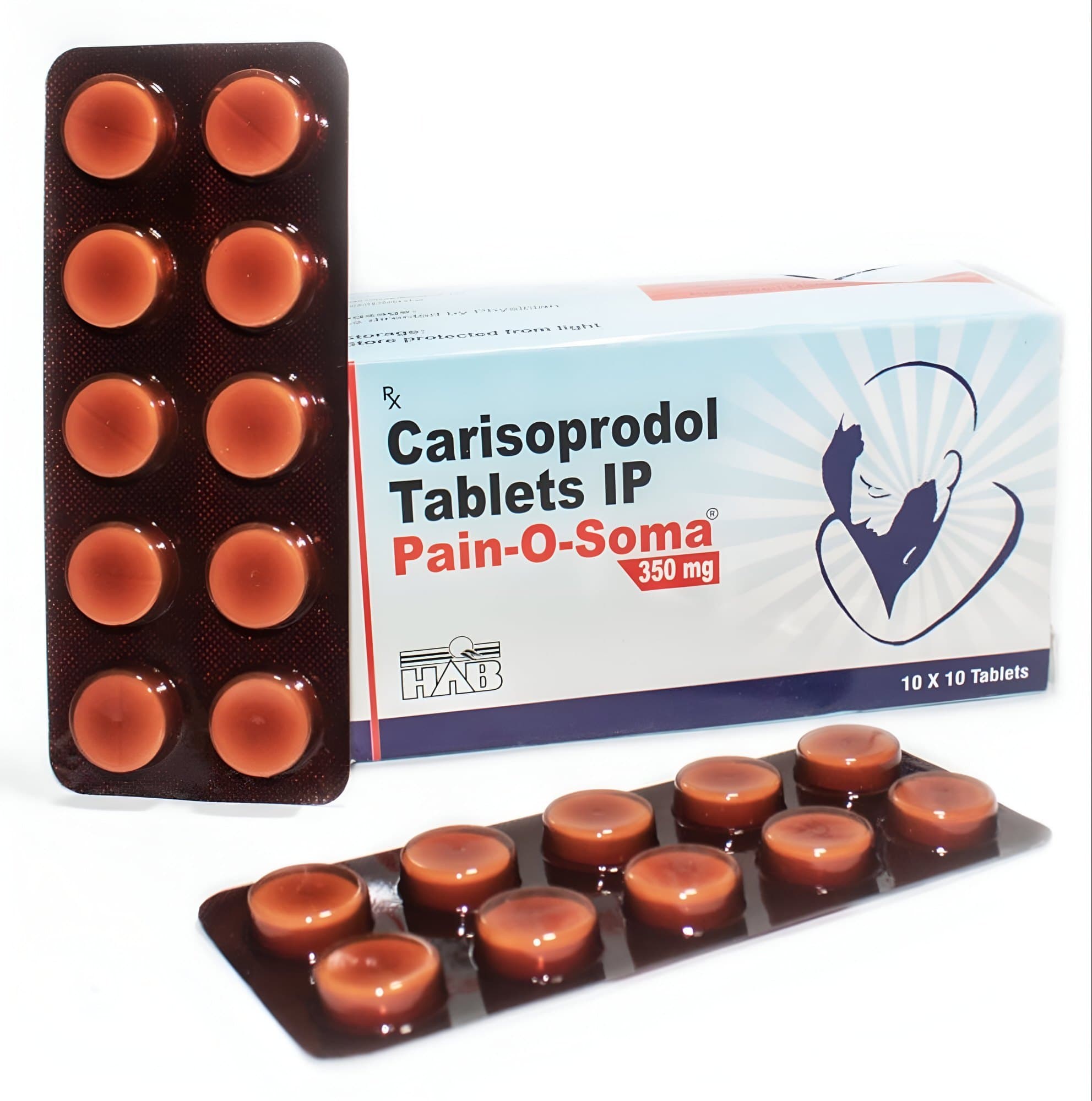
The products in this category differ by brand and labelled strength rather than by molecule — Pain-O-Soma, Prosoma and generic carisoprodol all contain the same active ingredient. Strength selection is a prescriber's decision and nothing on this page should be read as guidance on it. What this page can usefully give you is the safety picture, the vocabulary and the questions to ask.
Compare the options in this range
Every product in this category contains the same active ingredient. What differs is the brand, the presentation and the labelled strength — and labelled strength is a prescriber's decision, so there is no dose column here. The final row sets carisoprodol in context against the wider approaches used for musculoskeletal pain in Australia.
| Option | Active ingredient | Formats | Course profile | Notes |
|---|---|---|---|---|
| Pain-O-Soma | Carisoprodol | Tablets, two labelled strengths | Short course only, as directed by a prescriber | The most widely recognised carisoprodol brand in this range. Sedating; not to be combined with alcohol, opioids or other sedatives. Carries dependence potential. |
| Prosoma | Carisoprodol | Tablets | Short course only, as directed by a prescriber | The same active ingredient under a different manufacturer's brand. Precautions, interactions and dependence potential are identical to any other carisoprodol product. |
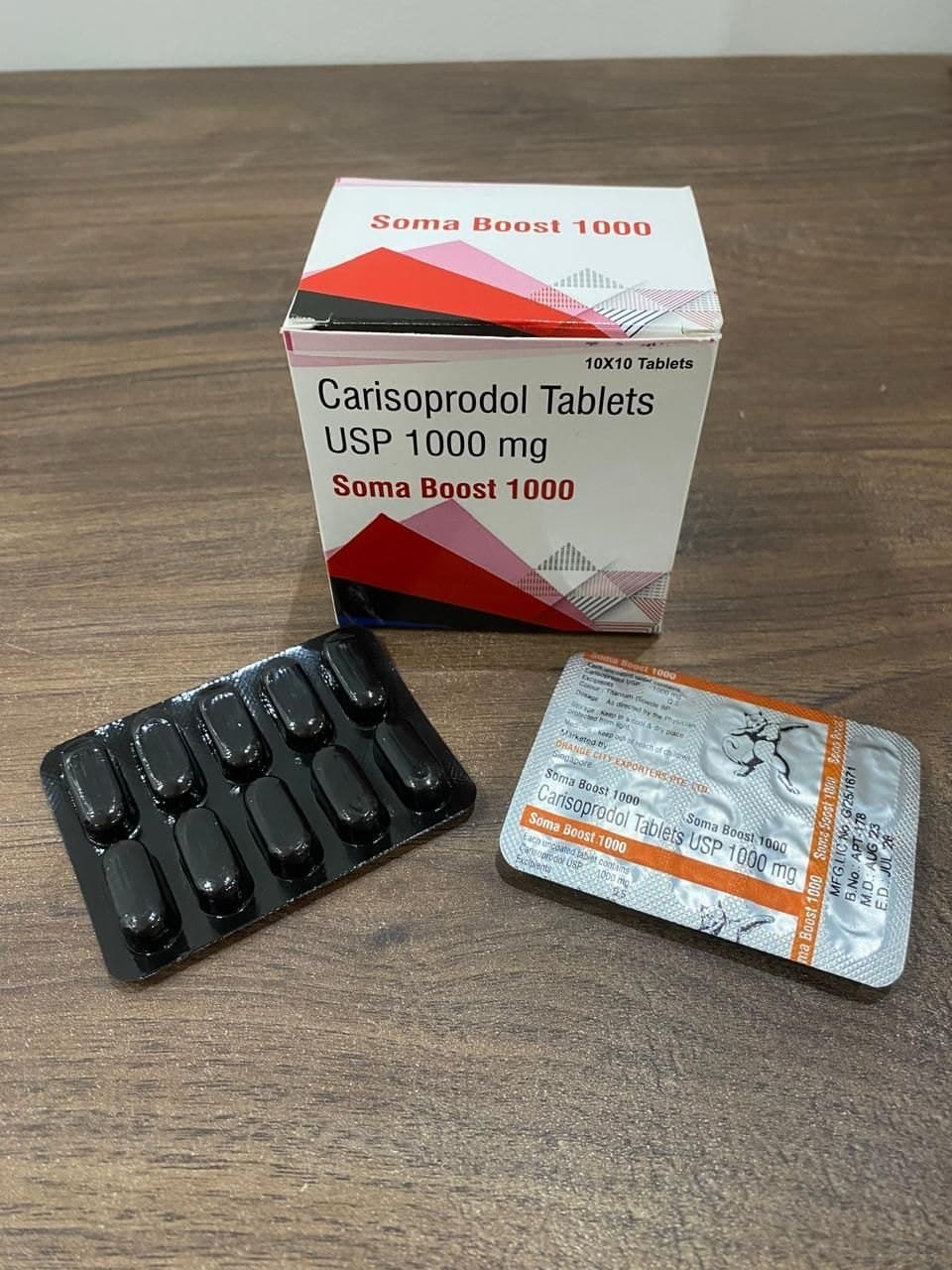
| Generic carisoprodol | Carisoprodol | Tablets, higher labelled strength | Short course only, as directed by a prescriber | Unbranded presentation of the same molecule. A higher number on the label is not a suggestion to take more — it changes nothing about who the medicine is suitable for. |
| Non-sedating approaches (for context) | Simple analgesics, anti-inflammatories, topical preparations | Tablets, capsules, gels and creams | Varies; several are pharmacy or general-sale medicines | Australian guidance for acute musculoskeletal pain leads with staying active, heat and simple analgesia, with physiotherapy where needed. Ask your prescriber why a sedating muscle relaxant is the right step for you rather than one of these. |
Swipe the table sideways to see every column.
Course profiles describe the general shape of treatment, not a schedule. Carisoprodol is a short-course medicine everywhere it is available. If pain persists beyond a couple of weeks, the answer is a reassessment, not a longer run of the same medicine.
How to choose
1Check for red flags before anything else
Loss of bladder or bowel control, numbness around the groin or inner thighs, progressive leg weakness, unexplained weight loss, fever, or pain after significant trauma all need urgent assessment. A muscle relaxant is the wrong response to any of these.
2Ask whether a sedating medicine is warranted at all
For most acute musculoskeletal pain, Australian guidance starts with staying active within your limits, heat, and simple analgesia, with physiotherapy where needed. A centrally-acting muscle relaxant is a step beyond that, and it is fair to ask your prescriber why it is the right step in your case.
3Audit what else you take, and drink
Carisoprodol is sedating and its effects add to those of alcohol, opioids, benzodiazepines, sleeping tablets, some antihistamines and cannabis. Combined sedation is the mechanism behind the most serious harms associated with this medicine. This is a conversation to have before you start, not after.
4Agree in advance how it ends
Because of dependence potential, carisoprodol is meant for a defined short course. Ask your prescriber how long, what the plan is if pain persists, and how to stop after a longer run — abrupt cessation after prolonged use can cause withdrawal symptoms.
There is no meaningful clinical choice to make between the products on this page, because they all contain carisoprodol. The real choice sits earlier: whether a centrally-acting muscle relaxant is the right approach for your pain at all, and whether one of the non-sedating options would serve you better. That is a conversation with an Australian prescriber, who can examine you, rule out the red flags and tell you what current Australian practice actually recommends for your situation.
What it's used for
- Acute low back pain and muscle strain, as a short-term adjunct to rest, movement and physiotherapy
- Muscle spasm following an injury, where a prescriber has judged a muscle relaxant appropriate
- Acute neck and shoulder muscle pain from strain or an awkward posture
- Short-term musculoskeletal discomfort where simple analgesia alone has not been enough
- Not intended for chronic or long-standing pain, for nerve pain, or for inflammatory joint disease — different approaches apply to each
Safety essentials
- Carisoprodol is sedating. Do not drive, ride, operate machinery or work at heights until you know exactly how it affects you — and be aware that impairment can persist into the next day.
- Do not drink alcohol while taking it. The combined sedative effect is the mechanism behind the most serious reported harms, including dangerously slowed breathing.
- Do not combine with opioids, benzodiazepines, sleeping tablets, sedating antihistamines, cannabis or other central nervous system depressants unless a prescriber has explicitly planned it and is monitoring you.
- Carisoprodol has a recognised potential for misuse and dependence, largely because it is metabolised to the sedative meprobamate. Take it only as prescribed, never take someone else's, and never share yours.
- Do not stop abruptly after a prolonged course. Withdrawal effects including agitation, insomnia, tremor and, rarely, seizures have been documented. Ask your prescriber how to come off it.
- It is intended for short courses only. If pain is still present after a couple of weeks, that is a reason to be reassessed, not a reason to keep going.
- Seek urgent medical care for severe drowsiness that is hard to rouse from, slow or shallow breathing, confusion, loss of coordination, seizures, or signs of a severe allergic reaction such as facial swelling or difficulty breathing. In an emergency in Australia, call 000.
- Tell your prescriber about kidney or liver problems, epilepsy or any seizure history, a history of substance misuse or dependence, and the rare inherited condition acute intermittent porphyria, in which carisoprodol should not be used.
- Not for use in pregnancy or while breastfeeding unless a prescriber has weighed it up specifically, and not appropriate for children or for older adults without careful assessment — sedation raises falls risk.
- Carisoprodol is not among the muscle relaxants routinely prescribed in Australia. Check the current ARTG registration status of any product and discuss it with an Australian prescriber before ordering.
- Always read the patient information leaflet supplied with the product, and check the packaging, batch number and expiry before use.
What to check before you order
Check the Australian regulatory position
Carisoprodol is a prescription medicine and is not one of the muscle relaxants commonly used in Australian practice. Search the Australian Register of Therapeutic Goods for the current status of any product before ordering, and raise it with an Australian prescriber or pharmacist.
Verify the active ingredient, not the brand
Pain-O-Soma, Prosoma and generic presentations are all carisoprodol. Brand names vary between markets; the active ingredient and the labelled strength printed on the pack are what a pharmacist will check against your prescription.
Inspect the packaging on arrival
Intact manufacturer packaging, an unbroken blister foil, a legible batch number and expiry, and an included patient information leaflet. Loose tablets, smudged or misspelt printing, missing batch details or a short-dated expiry are all reasons to stop and ask before use.
Judge the seller properly
A verifiable business address, a working contact route, Australian dollar pricing, a stated dispatch and delivery window, and a published returns and complaints process. Sedating medicines are exactly the category where an anonymous seller is the wrong risk to take.
Buy for a course, not a cupboard
Because of dependence potential, stockpiling a sedating muscle relaxant is a bad idea in its own right. Order what the prescribed course requires and return anything left over to a pharmacy for disposal.
Delivery, packaging & storage
- Orders are dispatched within one business day of payment clearing, with confirmation by email and tracking where available.
- Standard delivery is 2–4 business days Australia-wide, free on orders over $150. Regional and remote addresses can add time.
- Plain, unbranded outer packaging on every parcel, with nothing outside identifying the contents.
- No cold-chain handling is needed. Store tablets below 25°C in the original blister, away from heat, direct sunlight and humidity.
- Sedating medicines need extra care at home: keep them out of reach and sight of children, and store them where a visitor or housemate will not come across them.
- Do not decant into a pill organiser shared with other medicines — the batch and expiry need to stay readable, and sedating tablets should not be mixed up with anything else.
- Return unused or expired tablets to a pharmacy for safe disposal rather than putting them in household waste.
Terms explained
- Centrally-acting muscle relaxant
- A medicine that eases muscle discomfort by acting within the central nervous system rather than on the muscle itself. Sedation is characteristic of the group rather than an incidental side effect.
- Meprobamate
- The sedative substance carisoprodol is converted into in the body. It is the main reason the medicine is sedating and the main reason it carries dependence potential.
- Acute vs chronic pain
- Acute pain is recent and usually linked to an identifiable injury or strain; chronic pain persists beyond the expected healing time. They are managed very differently, and sedating medicines have little place in the latter.
- Musculoskeletal
- Relating to muscles, bones, tendons and ligaments. Musculoskeletal pain is the kind that comes from these structures rather than from nerves or internal organs.
- Red flags
- Specific features that suggest pain may have a serious cause needing urgent assessment — loss of bladder or bowel control, saddle numbness, progressive weakness, fever, unexplained weight loss or significant trauma.
- Dependence
- The state in which the body adapts to a medicine so that stopping it causes withdrawal symptoms. It can develop without any intention to misuse a medicine, which is why short courses and planned stopping matter.
- Adjunct
- A treatment used to support a main approach rather than replace it. Carisoprodol is described as an adjunct to rest, movement and physiotherapy — it is not the treatment on its own.
- Schedule 4 (Prescription Only Medicine)
- The Australian classification meaning supply requires a prescription from an authorised practitioner. Muscle relaxants of this type sit within the prescription-controlled part of the scheduling system.
Frequently asked questions
Is carisoprodol available in Australia?
+
It is a prescription medicine and it is not among the muscle relaxants routinely prescribed in Australian practice. Check the current registration status of any specific product on the Australian Register of Therapeutic Goods, and discuss it with an Australian prescriber before ordering — they may recommend a different approach that is better supported here.
How long is carisoprodol meant to be taken for?
+
It is a short-course medicine in every market where it is available, because of sedation and dependence potential. Your prescriber sets the length of the course. If pain is still there at the end of it, that is a reason to be reassessed rather than to continue.
Can I drink alcohol while taking it?
+
No. Carisoprodol is sedating and alcohol adds to that effect. The combination can cause severe drowsiness, loss of coordination and dangerously slowed breathing, and it is the mechanism behind the most serious harms reported with this medicine. Avoid alcohol entirely for the duration of the course.
Will it make me drowsy the next day?
+
Drowsiness is characteristic of the class rather than an occasional side effect, and it can persist into the following day. Do not drive, ride, operate machinery or work at heights until you know how it affects you. If you feel impaired in the morning, tell your prescriber.
Can carisoprodol cause dependence?
+
Yes. It is metabolised to meprobamate, a sedative substance, and both misuse and physical dependence have been documented. This is why it is a short-course medicine, why it should never be shared, and why stopping after a prolonged run needs to be planned with a prescriber.
What happens if I stop suddenly?
+
After a short course as directed, stopping is usually straightforward. After prolonged use, abrupt cessation has been associated with agitation, insomnia, tremor and, rarely, seizures. If you have been taking it for a while, ask your prescriber how to stop rather than doing it on your own.
Is a muscle relaxant the right treatment for back pain?
+
Not always, and often not first. Australian consumer guidance for acute back pain leads with staying active within your limits, heat, reassurance and simple analgesia, with physiotherapy where it is needed. A sedating muscle relaxant sits beyond that, and it is reasonable to ask your prescriber why it is the right step for you.
When should back pain be treated as an emergency?
+
Seek urgent care for loss of bladder or bowel control, numbness around the groin or inner thighs, progressive weakness in the legs, back pain with fever, unexplained weight loss, or pain following significant trauma. In an emergency in Australia, call 000. None of these should be managed with a muscle relaxant.
Can I take it with painkillers I already have?
+
It depends entirely on what they are. Combining it with opioids, sleeping tablets, benzodiazepines or sedating antihistamines is the specific thing to avoid, because the sedation compounds. Give your prescriber and pharmacist a complete list, including anything bought over the counter.
Will it work for nerve pain or arthritis?
+
Those are different problems. Nerve pain and inflammatory joint disease are approached with different medicines and different management plans. If your pain is burning, shooting or comes with numbness or pins and needles, mention that specifically — it points away from a simple muscle strain.
What is the difference between Pain-O-Soma and Prosoma?
+
The brand and the manufacturer. Both contain carisoprodol, and the precautions, interactions and dependence potential are identical. Check the active ingredient and labelled strength printed on the pack against your prescription rather than going by brand.
How is this category shipped and stored?
+
Dispatched within one business day of payment clearing, arriving in 2–4 business days Australia-wide, free over $150, in plain unbranded packaging. No cold chain is needed — store tablets below 25°C in the original blister, away from heat and humidity, and keep sedating medicines well out of reach of children.
Australian information sources
For independent, Australian information about the medicines in this range, we point customers to the following bodies. Search for the medicine by name on their sites rather than relying on overseas material.
- Therapeutic Goods Administration (TGA)
- Australian Register of Therapeutic Goods (ARTG)
- Healthdirect Australia
- Australian Commission on Safety and Quality in Health Care
Important: This is general information, not medical advice, and it is not a recommendation to use any particular medicine. Always read the patient information leaflet and consult a doctor or pharmacist before use.
Health guides
Guides & related reading for Pain Relief
22 pharmacist-written guides — newest research first.
1 / 4