
Condition guide
Muscle Pain and Spasm: symptoms & treatment
Acute muscle pain and spasm is sudden, uncomfortable tightening or aching in a muscle, often following an injury, strain or overuse. It commonly affects the back, neck or limbs and can make everyday movement difficult. Most episodes settle within a few weeks with rest and simple measures, but ongoing or worsening pain is worth discussing with a doctor or pharmacist.
Reviewed by the Kamagra AUS Pharmacy Team on 5 September 2026 · Next review June 2027
Sources for the medical information on this page
- Healthdirect Australia — Muscle pain — Search "muscle pain" for Australian guidance on causes, self-care and when to see a doctor.
Recognising the signs
- Sudden tightness, tension or a visible knot in a muscle
- Sharp or aching pain that worsens with movement of the affected area
- Muscle spasms or twitching that come on suddenly and involuntarily
- Reduced range of movement or stiffness in the affected joint or limb
- Tenderness to touch over the affected muscle
Common causes
- Muscle strain from lifting, sudden movement or awkward posture
- Overuse during exercise or unaccustomed physical activity
- Poor posture, particularly with prolonged sitting or repetitive movements
- Dehydration or an imbalance of electrolytes such as sodium, potassium or magnesium
- Direct injury, such as a knock, fall or sporting accident
- Underlying spinal or joint conditions putting extra strain on surrounding muscles
- Stress or tension, which can contribute to tight neck and shoulder muscles
Treatment options we deliver Australia-wide
Acute musculoskeletal pain is usually managed first with rest, gentle movement and standard pain relief. Where a doctor judges that additional short-term muscle relaxation would help, a centrally acting skeletal muscle relaxant such as carisoprodol may be prescribed alongside these measures. It is intended only for brief courses, generally no more than two to three weeks, because evidence of benefit reduces and risks increase with longer use. Always read the patient information leaflet and follow your doctor's instructions, and never combine it with alcohol or other sedating medicines.
Pain Relief In stock
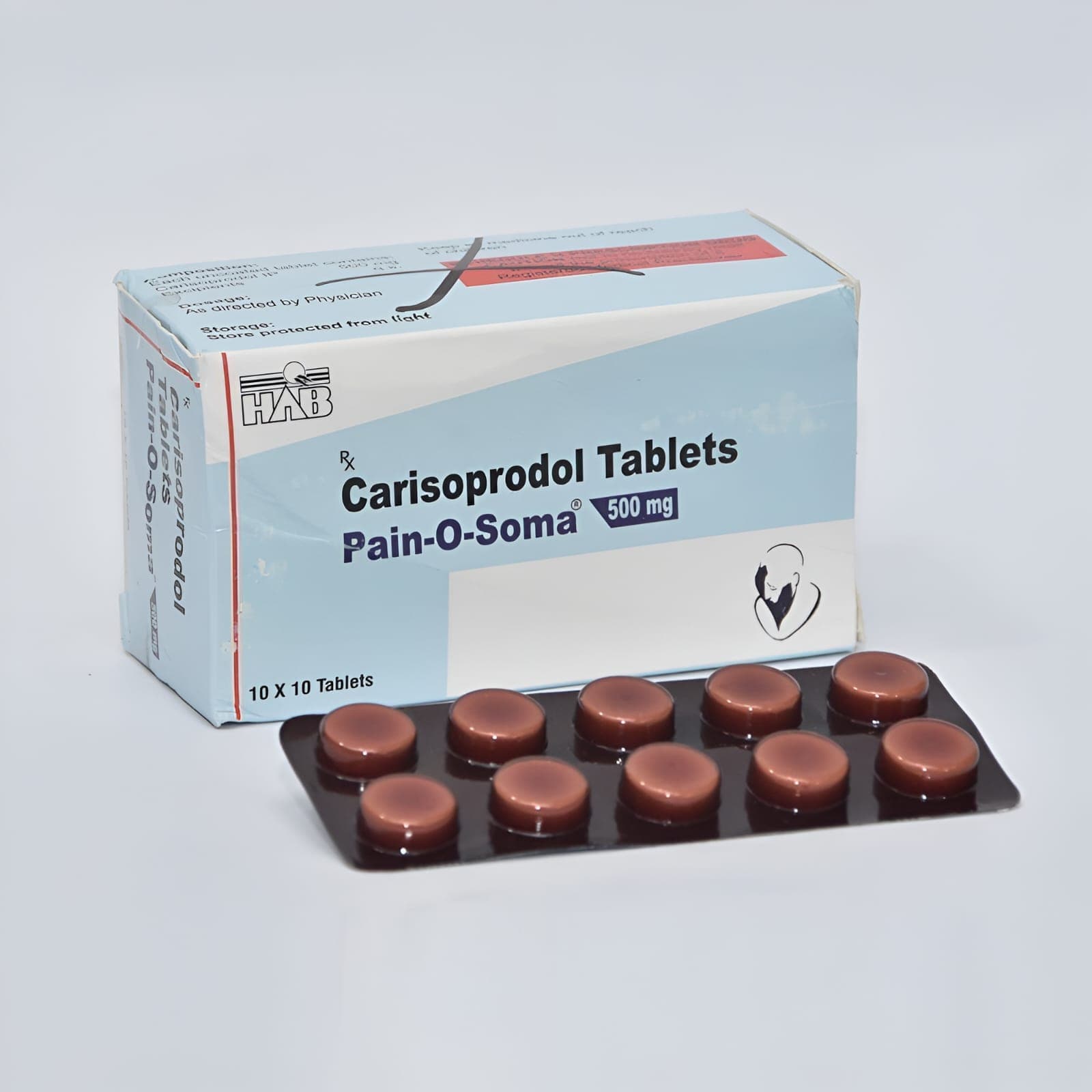
Pain-O-Soma 500mg — Carisoprodol Tablets
Carisoprodol 24h dispatch
From
View$104.55
Lifestyle & self-care support
- Rest the affected muscle initially, but avoid prolonged inactivity once acute pain eases
- Apply ice in the first day or two, then gentle heat, as comfort allows
- Stretch and move gently within your pain limits to avoid stiffness
- Stay well hydrated, particularly around exercise or in hot weather
- Warm up before activity and take care with lifting technique and posture
- Build activity back up gradually rather than returning to full exertion too soon
How to choose & when to see a doctor
Most acute muscle pain and spasm improves with rest, gentle movement and simple pain relief within a couple of weeks. See a doctor if the pain is severe, does not improve, is linked to an injury with numbness, weakness or loss of function, or if you are considering a prescription muscle relaxant, as these are intended for short-term use only and carry risks such as drowsiness and dependence. Read the patient information leaflet carefully and never drive or drink alcohol while taking a muscle relaxant until you know how it affects you.
Frequently asked questions
How long does acute muscle pain usually last?
+
Most muscle strains and spasms improve within a few days to a couple of weeks with rest, gentle movement and simple pain relief. If pain persists beyond this, worsens, or is accompanied by numbness or weakness, it is worth seeing a doctor to check for another cause.
Do I need a prescription for a muscle relaxant like carisoprodol?
+
Yes. Carisoprodol is a prescription-only medicine, so it can only be supplied against a valid prescription from a doctor. Many muscle strains settle with rest, ice or heat, gentle stretching and over-the-counter pain relief alone, and a doctor may consider a short course of a prescription muscle relaxant alongside these measures only for more significant acute spasm.
Can I take a muscle relaxant for ongoing back or neck pain?
+
Muscle relaxants such as carisoprodol are intended only for short-term use, generally no more than two to three weeks, and are not suitable for managing long-term or chronic muscle pain. Ongoing pain should be assessed by a doctor, who can look for an underlying cause and suggest a longer-term approach.
Is it safe to drive or drink alcohol while taking a muscle relaxant?
+
No. Medicines such as carisoprodol can cause marked drowsiness and dizziness, and alcohol greatly increases this sedative effect. Avoid driving, operating machinery or drinking alcohol until you know how the medicine affects you, and avoid alcohol completely during treatment.
When should I see a doctor about muscle pain?
+
See a doctor if the pain is severe, follows a significant injury, is accompanied by numbness, weakness or loss of function, or does not start to improve with rest and simple measures after a couple of weeks. They can assess the cause and advise whether a short course of prescription treatment is appropriate.
Muscle Pain and Spasm health guides
What Is Carisoprodol? How It's Classified in Australia
A plain-English introduction to carisoprodol — what kind of medicine it is, how Australia classifies it, and why that classification exists.
Read guideCarisoprodol vs Other Muscle Relaxants: How It Compares
What actually distinguishes carisoprodol from other muscle relaxants — mechanism, dependence risk and duration of use — without ranking one as simply "better".
Read guideSigns You Might Need a Muscle Relaxant: When to See a Doctor
Muscle pain and spasm are common, but deciding whether a muscle relaxant is appropriate is a clinical judgement — here's what to bring to that appointment, and which symptoms need urgent care.
Read guideMuscle Relaxant Dependence: The Real Risk, Explained
Why carisoprodol carries a genuine dependence risk, what tolerance and withdrawal actually mean, and what a controlled-medicine classification is protecting against.
Read guideCarisoprodol and Driving or Operating Machinery: The Safety Basics
Why carisoprodol's sedative effect makes driving and machinery a genuine safety question, not a minor label caveat, and what to check before you get behind the wheel.
Read guideCarisoprodol and Alcohol: What Actually Happens
Why carisoprodol and alcohol should not be combined — the shared mechanism, the more serious respiratory risk, and what to do if it has already happened.
Read guideBack Pain and Muscle Spasm: What Evidence-Based Care Looks Like
Current guidance on acute back pain looks different from what many people still assume — here's what actually helps, and where medicine fits into a broader plan.
Read guideQuestions to Ask Your Doctor Before Starting a Muscle Relaxant
A practical list of questions to bring to the consultation before starting carisoprodol or any muscle relaxant — on diagnosis, dependence risk, interactions and follow-up.
Read guideChronic vs Acute Pain: What's the Real Difference?
Acute and chronic pain aren't just about how long pain lasts — they're genuinely different processes in the body, and that difference shapes how each is treated.
Read guideNerve Pain vs Muscle Pain: How to Tell Them Apart
Nerve pain and muscle pain can both show up in an arm, leg or back, but they come from different sources and often respond to different treatments. Here's how to tell them apart.
Read guideImportant: This information is general and not a substitute for medical advice. Always read the patient information leaflet supplied with your medicine and consult a doctor or pharmacist before starting treatment.