

Shop by category
Buy Pregabalin Online Australia
Pregabalin is a nerve-pain medicine used for neuropathic pain, fibromyalgia and seizure management, available here as generic Pregagesic, Nervigesic and related brands.
6 productsNerve painNeuropathy Free over $150
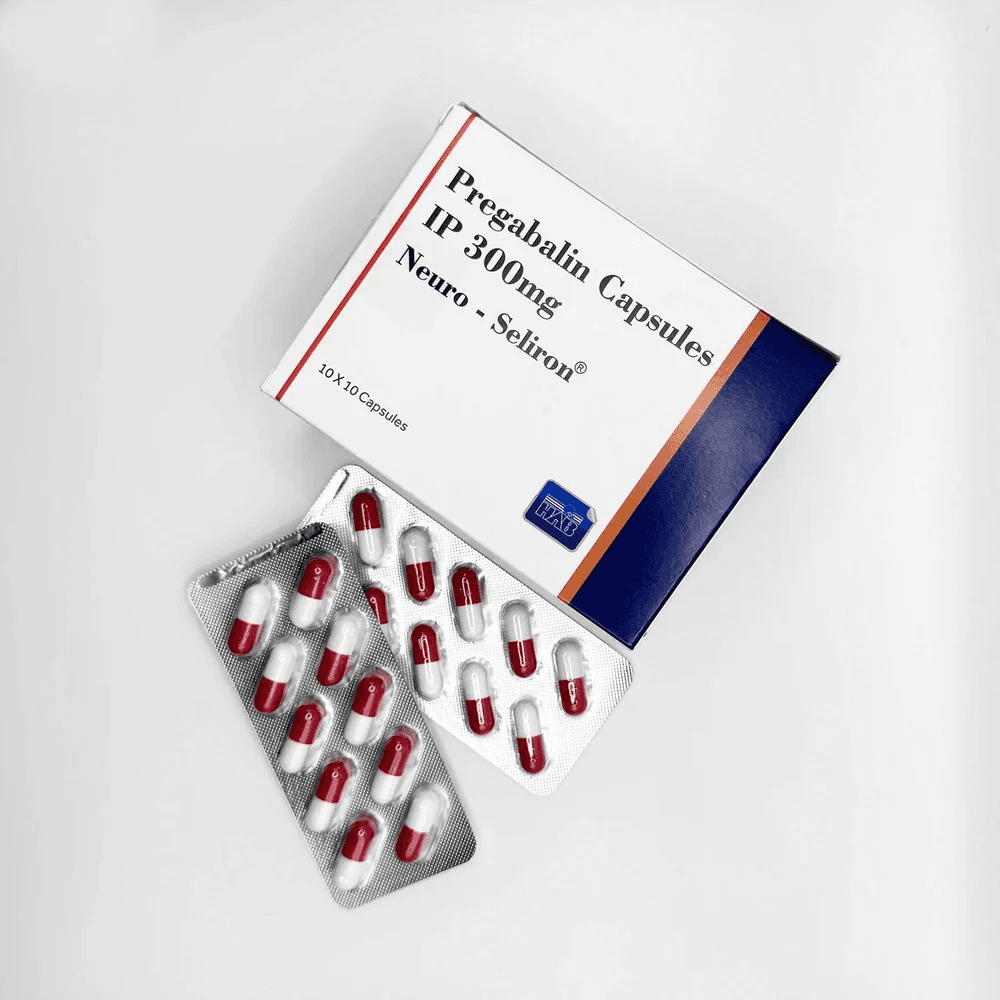
Generic pregabalin capsules, sold under the Pregagesic, Nervigesic, Neuro Seliron and Pregacare names. Pregabalin is used for nerve (neuropathic) pain, as an add-on treatment in certain types of epilepsy, and in generalised anxiety disorder. It is a Prescription Only Medicine in Australia with a recognised potential for misuse and dependence, and it is not a medicine to start, change or stop on your own. Read the patient information leaflet and follow your prescriber's plan.
Pregabalin products




About Pregabalin
Reviewed by the Kamagra AUS Pharmacy Team on 5 September 2026 · Next review June 2027
Key facts
- Pregabalin is used for neuropathic pain, as add-on treatment in partial-onset seizures, and in generalised anxiety disorder.
- It is a continuing treatment built up in steps by a prescriber, not an as-needed painkiller.
- It must never be stopped abruptly after a sustained course — it is tapered under medical direction.
- It has recognised misuse and dependence potential, and Australian jurisdictions monitor supply of medicines of concern in real time.
- Combining it with opioids, benzodiazepines or other sedatives is the most serious interaction, because of the effect on breathing.
- All the brands in this range are the same molecule; check the active ingredient and labelled strength against your prescription.
Neuropathic pain is pain generated by the nervous system itself rather than by damage to skin, muscle or bone. People describe it as burning, shooting, electric or stabbing, often with numbness, pins and needles, or a strange oversensitivity in which light touch or bedsheets become painful. Because the problem is in the signalling rather than in the tissue, it does not respond well to the medicines that help a sprained ankle — which is precisely why a different class of medicine exists for it.
Pregabalin works on that signalling. It binds to a subunit of certain calcium channels on over-excited nerve endings, which reduces the release of the chemical messengers those nerves use to pass on pain and excitation signals. The same underlying action explains why one molecule has three fairly different approved uses: neuropathic pain, add-on treatment for partial seizures in epilepsy, and generalised anxiety disorder. In each case it is calming an over-active signalling system rather than treating a structural problem.
It is a continuing treatment, not an as-needed one. Prescribers typically begin low and increase gradually while watching for side effects, and it is normal for the benefit to build over days to weeks rather than appearing immediately. That is a genuinely important expectation to hold, because people who expect the response of a painkiller often conclude too early that it is not working. Equally, it is not a medicine to be adjusted informally — the increases and any reduction should follow the plan your prescriber sets.
Dependence and misuse are the reason pregabalin is treated carefully in Australia. Reports of misuse rose internationally after its use expanded, and it has been associated with harm particularly when combined with opioids or other sedatives, where the combined effect on breathing is the danger. Australian jurisdictions operate real-time prescription monitoring systems for medicines of concern, and pregabalin has been the subject of specific prescribing guidance and safety communications. In practice that means: take it as prescribed, do not top up from another source, and be honest with your prescriber about your use and about any history of substance misuse.
Side effects worth knowing about before you start include drowsiness, dizziness, blurred vision, weight gain, fluid retention and difficulty concentrating. Most are dose-related and often ease as the body adjusts, but drowsiness and dizziness are the practical ones — they affect driving and work safety, and they add to the effects of alcohol. Prescribers also watch for changes in mood, because a small number of people taking anti-epileptic medicines experience new or worsening low mood or thoughts of self-harm. If that happens, it is an urgent conversation, not something to wait out.
The products in this category are all the same molecule under different manufacturers' brand names, in capsule form across several labelled strengths. Choosing between them is not a clinical decision. What matters is that the active ingredient and labelled strength on the pack match what your prescriber specified, that the product came from a source you can verify, and that you take it as part of a plan that includes a review date and an agreed way to stop.
Compare the options in this range
Every product here contains the same active ingredient in capsule form. Brands differ by manufacturer and presentation, not by how the medicine works. The final row places pregabalin next to the other approaches used for nerve pain, so you can see where it sits. Labelled strength is a prescriber's decision and is deliberately not compared here.
| Option | Active ingredient | Formats | Treatment profile | Notes |
|---|---|---|---|---|
| Pregagesic | Pregabalin | Capsules | Continuing treatment, built up and reviewed by a prescriber | Standard generic pregabalin. Precautions, interactions and dependence potential are those of the molecule, not the brand. |
| Nervigesic | Pregabalin | Capsules, including a higher labelled strength line | Continuing treatment, built up and reviewed by a prescriber | The most commonly ordered brand in this range. A higher number on the label reflects the manufacturer's presentation, not a recommendation to take more. |
| Neuro Seliron | Pregabalin | Capsules | Continuing treatment, built up and reviewed by a prescriber | Another manufacturer's generic presentation of the same molecule. Check the pack against your prescription by active ingredient and labelled strength. |
| Pregacare | Pregabalin | Capsules | Continuing treatment, built up and reviewed by a prescriber | Equivalent generic presentation. As with all pregabalin, it should not be stopped abruptly after a sustained course. |
| Other nerve-pain approaches (for context) | Gabapentin, certain antidepressants, topical agents, non-drug therapies | Capsules, tablets, patches, creams; physiotherapy and psychological approaches | Varies; several are also continuing treatments | Pregabalin is one option among several for neuropathic pain. Australian practice often combines a medicine with exercise, pacing and psychological support. Ask your prescriber which combination fits your situation. |
Swipe the table sideways to see every column.
Treatment profiles describe the general shape of use, not a schedule. Pregabalin is started and adjusted under a prescriber's direction and should never be stopped abruptly after a sustained course.
How to choose
1Confirm the pain is actually neuropathic
Burning, shooting or electric pain, numbness, pins and needles, or pain from light touch point towards nerve involvement. Ordinary aching muscular pain does not, and pregabalin is not the right tool for it. Describe your pain in those terms when you see a prescriber — the description genuinely changes what they consider.
2Declare kidney function, other sedatives and any history of misuse
Pregabalin is cleared by the kidneys, so reduced kidney function changes what is safe. Combination with opioids, benzodiazepines, sleeping tablets or alcohol is the main serious risk because of the combined effect on breathing. A history of substance misuse does not rule the medicine out, but your prescriber needs to know.
3Expect a gradual build and a review date
Prescribers usually start low and increase in steps, and benefit typically builds over days to weeks. Agree in advance when you will be reviewed and what would count as it not working, so the decision to continue or change is made deliberately rather than by default.
4Agree an exit plan at the start
Pregabalin should be tapered rather than stopped abruptly after sustained use. Asking at the outset how you would come off it is not pessimism — it is the single most useful question people forget to ask about this medicine.
There is no clinical difference between the brands on this page; they are all pregabalin capsules. The decisions that matter are made with a prescriber: whether pregabalin is right for your type of pain or anxiety, what labelled strength to start at, how quickly to build up, how it interacts with your kidney function and your other medicines, and how it will eventually be reduced. Match the active ingredient and labelled strength on the pack to your prescription, and keep your prescriber informed about how you are going.
What it's used for
- Peripheral neuropathic pain, including painful diabetic neuropathy
- Post-herpetic neuralgia — nerve pain persisting after an episode of shingles
- Central neuropathic pain, such as pain after a spinal cord injury
- Fibromyalgia, where a prescriber has judged it appropriate as part of a broader plan
- Nerve pain linked to sciatica or a compressed nerve, alongside treatment of the cause
- Partial-onset seizures in epilepsy, as an add-on to other anti-epileptic treatment
- Generalised anxiety disorder, where a prescriber has assessed it as suitable
- Not a treatment for ordinary musculoskeletal pain, headache or acute injury pain
Safety essentials
- Do not stop pregabalin suddenly after a sustained course. Abrupt cessation can cause withdrawal effects including anxiety, insomnia, nausea, sweating, headache and, in people treated for epilepsy, a risk of seizures. The reduction is tapered under a prescriber's direction.
- Combining pregabalin with opioids, benzodiazepines, sleeping tablets, alcohol or other sedatives can cause severe drowsiness and dangerously slowed breathing. This combination has been associated with deaths internationally and is the most important interaction to understand.
- Pregabalin has a recognised potential for misuse and dependence. Take only what has been prescribed for you, never take someone else's, never share yours, and do not obtain it from more than one source. Australian jurisdictions operate real-time prescription monitoring for medicines of concern.
- Drowsiness, dizziness and blurred vision are common, particularly early on and after any increase. Do not drive, ride or operate machinery until you know how it affects you — and Australian driving rules place the responsibility for that judgement on you.
- Tell your prescriber promptly about new or worsening low mood, agitation, or any thoughts of self-harm. A small number of people taking anti-epileptic medicines experience these, and it needs immediate attention rather than waiting for the next appointment.
- Seek urgent medical care for swelling of the face, lips, tongue or throat, difficulty breathing, a severe rash with blistering or peeling skin, or severe unexplained muscle pain with fever. In an emergency in Australia, call 000.
- Tell your prescriber about kidney problems — pregabalin is cleared by the kidneys and reduced function changes what is appropriate. Also mention heart failure, a history of substance misuse, and any breathing condition such as severe COPD or sleep apnoea.
- Weight gain and fluid retention are recognised effects. Mention swelling of the ankles or feet, or unexplained weight change, at your review.
- If you are pregnant, planning a pregnancy or breastfeeding, discuss pregabalin with your prescriber before continuing. It is not a decision to make without advice, and stopping without advice is not safe either.
- Store it securely and out of sight, treat it as you would any controlled medicine, and return unused capsules to a pharmacy rather than keeping them.
- Always read the patient information leaflet supplied with the product, and check the packaging, batch number and expiry before use.
What to check before you order
Confirm the prescription position
Pregabalin is a Schedule 4 Prescription Only Medicine in Australia and is subject to specific prescribing guidance because of its misuse potential. Any framing that suggests it can be obtained without an assessment should be treated as a warning sign about the source.
Check the active ingredient against the prescription
Pregagesic, Nervigesic, Neuro Seliron and Pregacare are all pregabalin. Brand names differ between markets while the molecule does not. Verify the active ingredient and labelled strength printed on the pack against what your prescriber specified.
Understand ARTG status
The Australian Register of Therapeutic Goods lists products the TGA has assessed for supply in Australia. International generics may be manufactured to Good Manufacturing Practice standards without being ARTG-registered. Know which you are ordering, and tell your pharmacist.
Inspect the packaging
Intact manufacturer packaging, unbroken blister foil, a legible batch number and expiry, capsules uniform in colour and size, and an included leaflet. Loose capsules, missing batch details, misspelt printing or a short-dated expiry are reasons to stop before use.
Assess the seller
A verifiable business address, a working contact route, Australian dollar pricing, a stated dispatch and delivery window, a published returns and complaints process, and a privacy policy. Medicines with dependence potential are the wrong place to accept an anonymous supplier.
Order to the plan, not to a stockpile
Because pregabalin is tapered rather than stopped, and because it has misuse potential, holding large quantities at home is a bad idea. Order what your prescribed course needs and return anything unused to a pharmacy.
Delivery, packaging & storage
- Orders are dispatched within one business day of payment clearing, with confirmation by email and tracking where available.
- Standard delivery is 2–4 business days Australia-wide, free on orders over $150. Regional and remote destinations can take longer.
- Plain, unbranded outer packaging on every parcel — nothing outside identifies the contents.
- No cold-chain handling is required. Store capsules below 25°C in the original blister, away from heat, direct sunlight and humidity.
- Because pregabalin is a continuing treatment, plan your reorder ahead of running out — an unplanned gap is not the same as a planned taper and can cause withdrawal effects.
- Store it securely and out of sight of children, visitors and housemates, and keep it in the pack it arrived in so the batch and expiry stay readable.
- Return unused or expired capsules to a pharmacy for safe disposal rather than putting them in household waste.
Terms explained
- Neuropathic pain
- Pain caused by damage to or dysfunction of the nervous system itself. Typically described as burning, shooting or electric, often with numbness or pins and needles.
- Post-herpetic neuralgia
- Nerve pain that persists in an area of skin after an episode of shingles has healed. One of the classic indications for a nerve-pain medicine.
- Peripheral neuropathy
- Damage to the nerves outside the brain and spinal cord, most often in the feet and hands. Diabetes is the most common cause in Australia.
- Titration
- Building a medicine up in steps to find the level that works with tolerable side effects, rather than starting at the target level. Standard practice with pregabalin.
- Tapering
- Reducing a medicine gradually rather than stopping it outright, so the body can adjust. Pregabalin is tapered after sustained use to avoid withdrawal effects.
- Dependence
- The state in which the body adapts to a medicine so that stopping it causes withdrawal symptoms. It can develop without any intent to misuse the medicine.
- Real-time prescription monitoring
- Australian systems that let prescribers and pharmacists see a patient's recent supply of medicines of concern at the point of care, to reduce duplicate supply and harm.
- Schedule 4 (Prescription Only Medicine)
- The Australian classification meaning a medicine can only be supplied against a prescription from an authorised practitioner. Pregabalin sits here, with additional prescribing guidance attached.
Frequently asked questions
What is pregabalin used for?
+
It has three main approved areas of use: neuropathic pain, including painful diabetic neuropathy and post-herpetic neuralgia; add-on treatment for partial-onset seizures in epilepsy; and generalised anxiety disorder. All three involve calming over-active nerve signalling, which is why one molecule covers such different-looking conditions.
Can I stop pregabalin suddenly?
+
No. After a sustained course, stopping abruptly can cause withdrawal effects including anxiety, insomnia, nausea, sweating and headache, and in people treated for epilepsy it can trigger seizures. The dose is reduced gradually under your prescriber's direction. Ask about the exit plan when you start, not when you want to stop.
Is pregabalin addictive?
+
It has a recognised potential for misuse and physical dependence, and international reports of misuse increased as its use expanded. Dependence can develop without any intention to misuse it, which is why it is prescription-controlled, why Australian jurisdictions monitor supply of medicines of concern in real time, and why it is tapered rather than stopped.
How long does it take to work?
+
Pregabalin is a continuing treatment rather than an as-needed painkiller, and benefit typically builds over days to weeks as the amount is increased in steps. That is a normal part of the process. Agree a review date with your prescriber so the decision to continue or change is deliberate.
Can I drink alcohol while taking pregabalin?
+
Alcohol adds to the drowsiness and dizziness pregabalin can cause, and the combination affects coordination and judgement. It is best avoided, particularly when starting or after any increase. Discuss it with your prescriber if alcohol is a regular part of your life, so the advice you get is realistic.
What is the most dangerous interaction to know about?
+
Combining pregabalin with opioids, benzodiazepines, sleeping tablets or other sedatives. The combined effect on breathing is the serious risk, and it has been associated with deaths internationally. Give your prescriber and pharmacist a complete list of everything you take, including anything obtained outside the health system.
Can I drive while taking it?
+
Drowsiness, dizziness and blurred vision are common, especially early on and after any increase. Do not drive, ride or operate machinery until you know how it affects you. Australian road rules place responsibility on the driver to be unimpaired, so if you feel affected, do not drive.
Does pregabalin cause weight gain?
+
Weight gain and fluid retention are recognised effects and are among the more common reasons people ask to change treatment. Mention swelling of the ankles or feet, or unexplained weight change, at your review — it is a legitimate thing to raise rather than something to put up with.
Is it the same as gabapentin?
+
They are related and act on the same target, but they are different molecules with different handling by the body and different prescribing. One is not a substitute for the other without a prescriber's decision, and you should never switch between them on your own.
Does the brand I receive matter?
+
Pregagesic, Nervigesic, Neuro Seliron and Pregacare all contain pregabalin. The clinically relevant details are the active ingredient and the labelled strength printed on the pack, which should match your prescription. If a brand change ever seems to affect you, tell your pharmacist.
Is pregabalin covered by the PBS?
+
PBS subsidy arrangements are set by the Australian Government and apply to specific indications and circumstances. Your prescriber or pharmacist can tell you what applies in your case. We are not a PBS supplier, so anything ordered here is a private purchase.
How is pregabalin shipped and stored?
+
Dispatched within one business day of payment clearing, arriving in 2–4 business days Australia-wide, free over $150, in plain unbranded packaging. Store capsules below 25°C in the original blister, away from heat and humidity, securely and out of reach of children. Because it is a continuing treatment, reorder before you run out.
Australian information sources
For independent, Australian information about the medicines in this range, we point customers to the following bodies. Search for the medicine by name on their sites rather than relying on overseas material.
- Therapeutic Goods Administration (TGA)
- Australian Register of Therapeutic Goods (ARTG)
- Healthdirect Australia
- Australian Commission on Safety and Quality in Health Care
- Pharmaceutical Benefits Scheme (PBS)
Important: This is general information, not medical advice, and it is not a recommendation to use any particular medicine. Always read the patient information leaflet and consult a doctor or pharmacist before use.
Health guides
Guides & related reading for Pregabalin
16 pharmacist-written guides — newest research first.
1 / 3