Muscle Relaxant Dependence: The Real Risk, Explained
Reviewed by the Kamagra AUS Pharmacy Team on 1 April 2026 · Next review June 2027
Summary
Why carisoprodol carries a genuine dependence risk, what tolerance and withdrawal actually mean, and what a controlled-medicine classification is protecting against.
On this page
- Tolerance, dependence and misuse are three different things
- The mechanism: what makes carisoprodol different
- Who is at greater risk
- Signs dependence may be developing
- Why treatment courses are generally kept short
- What "controlled medicine" means in practice
- If you're concerned about your own use
- Why this conversation is worth having early
Carisoprodol-based products such as Carisoprodol 1000mg are prescription-only medicines in Australia largely because of a recognised dependence risk — not every muscle relaxant carries the same weight of caution, but carisoprodol does. That risk is a core reason for its classification, not a footnote to it, and it's worth understanding before assuming any medicine in this category is simply a stronger painkiller.
Tolerance, dependence and misuse are three different things
These words get used interchangeably, but they describe different processes:
- Tolerance is when a medicine's effect diminishes with repeated use, so the same use produces less effect over time.
- Dependence is when the body has adapted to the medicine's presence, such that stopping abruptly can produce withdrawal effects.
- Misuse is using a medicine outside how it was prescribed — more often, for longer, or for a purpose other than what a doctor intended.
Any one of these can occur without the others, but carisoprodol carries a documented potential for all three, which is why it is monitored more closely than many other muscle relaxants.
The mechanism: what makes carisoprodol different
The body metabolises carisoprodol into meprobamate, a compound with its own history as a controlled substance because of its dependence potential. This metabolic step is the central reason carisoprodol is treated more cautiously than several other centrally acting muscle relaxants that do not share this pathway. It is discussed alongside classification detail in our guide to what carisoprodol is.
Who is at greater risk
Dependence risk is not evenly distributed. Prescribers pay closer attention where there is:
- A personal history of substance use disorder, including alcohol.
- A family history of dependence.
- Concurrent use of other sedating medicines.
- A pattern of using the medicine for longer than initially intended, or in higher amounts than discussed.
This is exactly the kind of history a prescription requirement is designed to surface — it cannot be assessed by a seller who never asks.
Signs dependence may be developing
None of the following are diagnostic on their own, but they are reasons to talk to a doctor rather than continue quietly:
- Needing more of the medicine to get the same effect.
- Feeling anxious or unwell when a dose is missed or delayed.
- Taking it for longer than originally discussed with a prescriber.
- Seeking it from more than one source, or without a current prescription.
- Prioritising getting the medicine over other responsibilities.
If any of this sounds familiar, the right step is an honest conversation with your GP or pharmacist — not stopping abruptly on your own, since withdrawal from a dependence-forming medicine can itself carry risk and should be supervised.
Why treatment courses are generally kept short
One of the main ways prescribers manage this risk is duration: carisoprodol is generally considered for short-term use around an acute episode rather than as an ongoing solution. This is a clinical judgement made case by case, not a fixed number you should look up and self-apply, and it is one of the more important questions to raise before starting — see our list of questions to ask your doctor before starting a muscle relaxant.
What "controlled medicine" means in practice
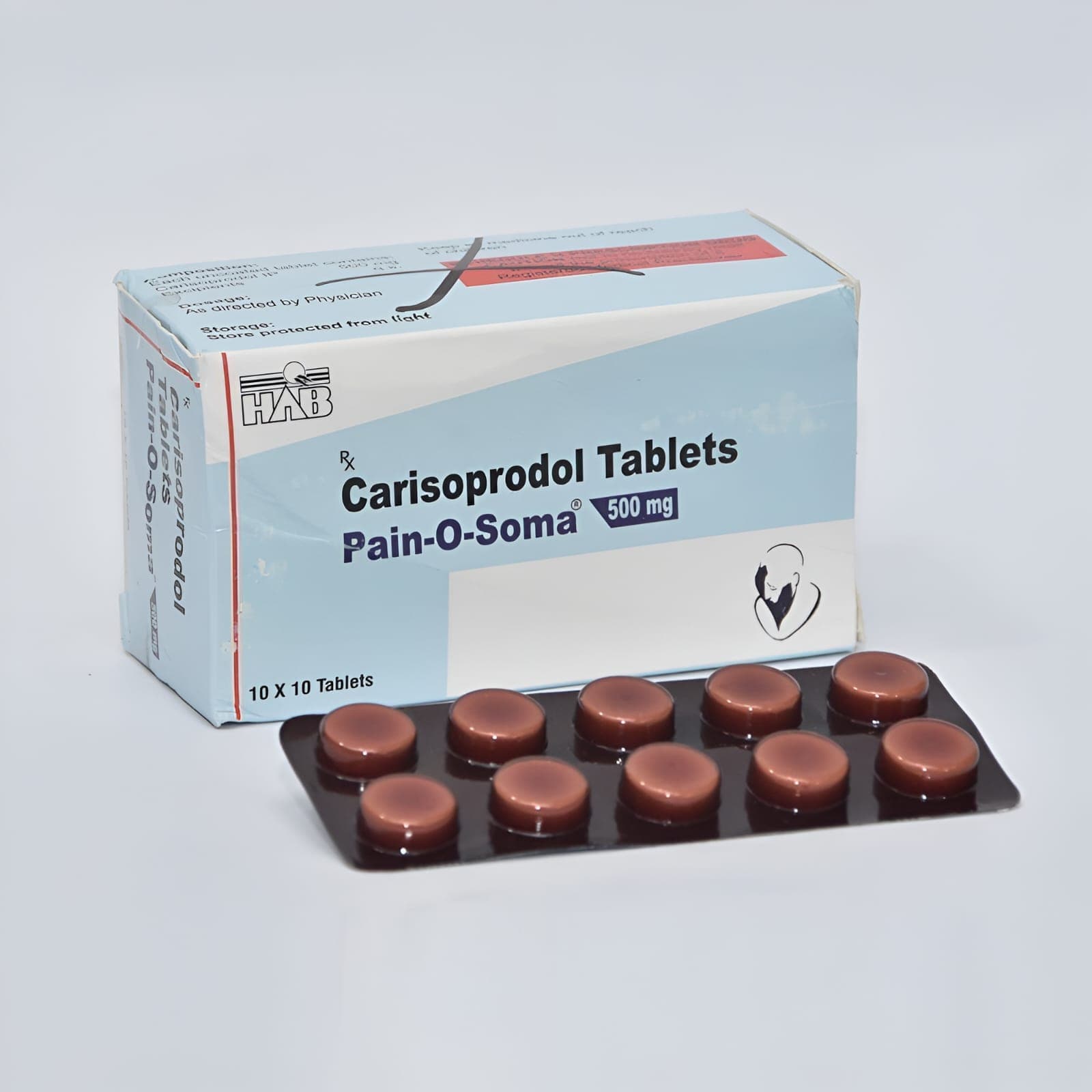
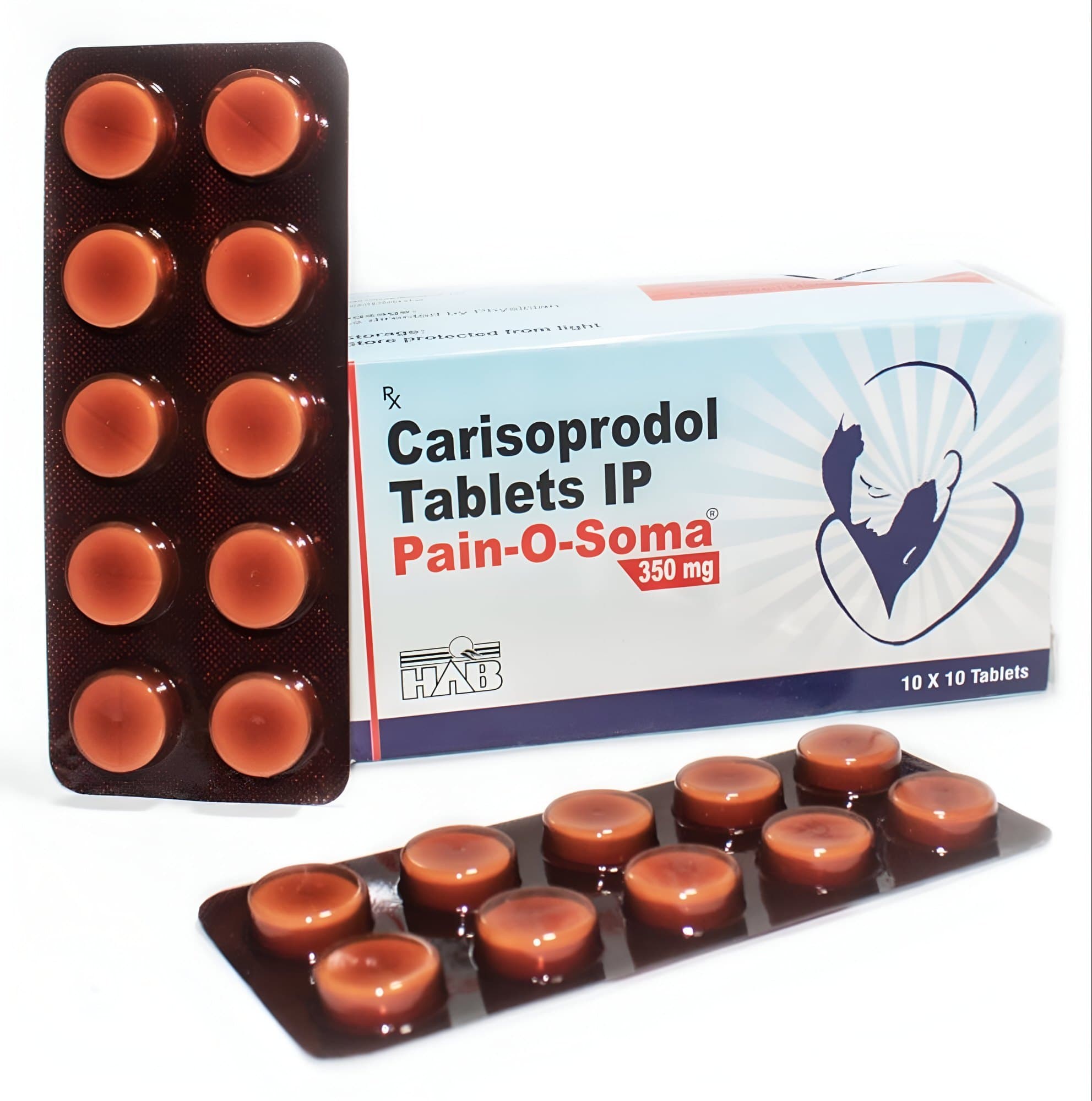
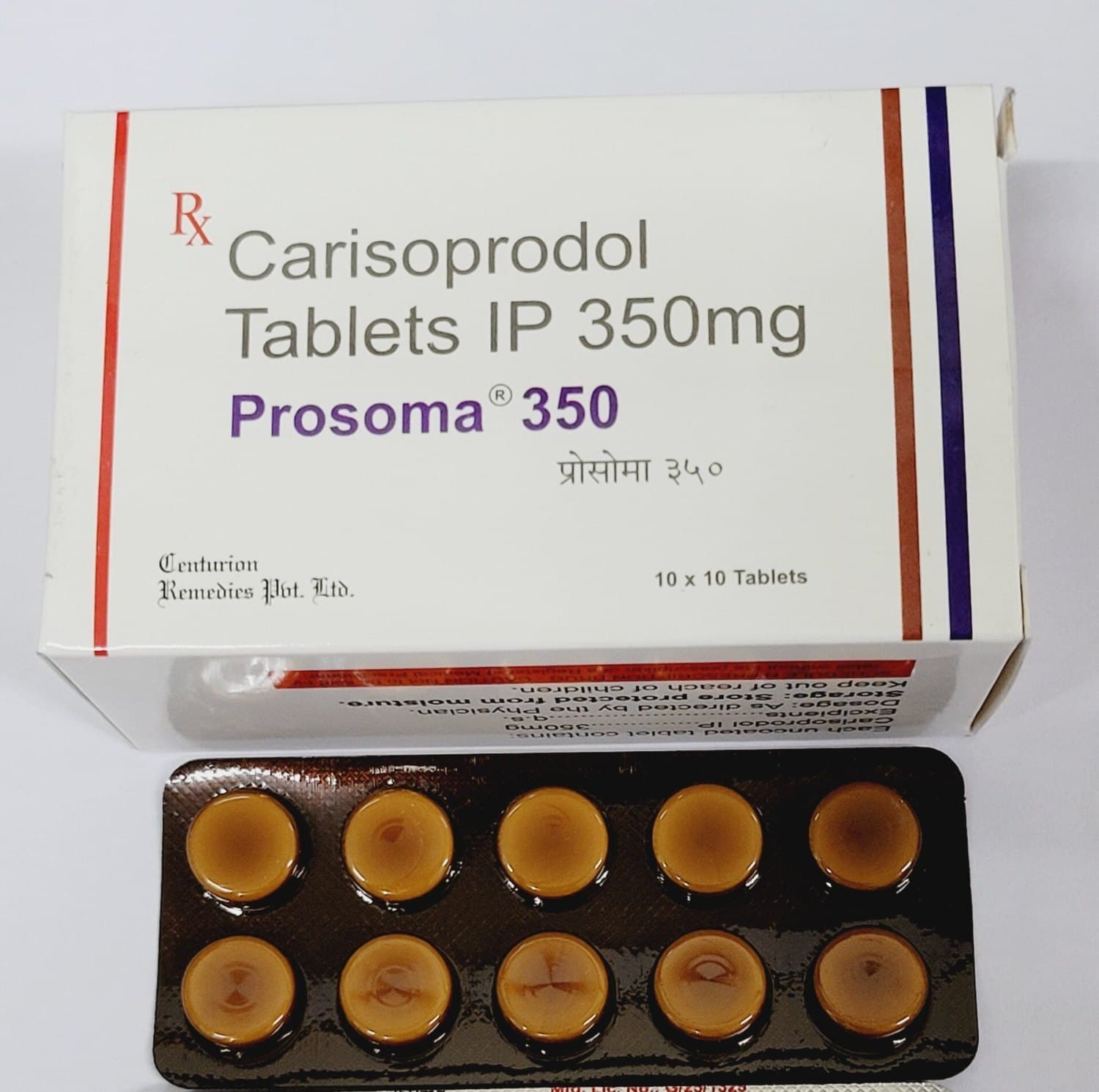
Because of this risk profile, carisoprodol sits in the prescription-only tier of Australia's Poisons Standard, and lawful supply always runs through a registered prescriber and a pharmacy. Products in our pain relief category, including Prosoma 350 and the Pain-O-Soma range, are supplied on that same basis. A seller offering to skip that step is not offering a shortcut — it is removing the exact safeguard this risk profile calls for.
If you're concerned about your own use
If you think your use of carisoprodol, or any muscle relaxant, has become more than what was intended, speak with your GP or pharmacist as a first step. Healthdirect Australia provides general guidance on medicine dependence and where to find support, and a GP can arrange a supervised approach to reducing or stopping the medicine safely rather than leaving you to manage withdrawal alone.
Why this conversation is worth having early
Raising a concern about dependence early, before a pattern is well established, generally makes it easier to address. Doctors and pharmacists have these conversations regularly and are not there to judge — their role is to help you reduce or stop the medicine safely, adjust the underlying pain management plan, and, where needed, connect you with additional support. Waiting until the situation feels more serious does not make the conversation easier; it usually just makes the eventual process longer.
This article is general educational information about a recognised medicine risk, not medical advice and not a diagnostic tool. If you are concerned about dependence on any medicine, speak with your doctor or pharmacist promptly.
Frequently asked questions
Is carisoprodol addictive?+
Carisoprodol carries a recognised potential for tolerance, dependence and misuse, largely because it is metabolised into meprobamate, a compound with its own dependence history. This is a core reason it is a prescription-only, closely monitored medicine in Australia.
Can I just stop taking carisoprodol if I'm worried about dependence?+
Speak with your doctor first. Stopping a dependence-forming medicine abruptly can cause withdrawal effects, and a GP can help manage a safe, supervised approach rather than leaving you to do it alone.
Do I need a prescription for carisoprodol because of this risk?+
Yes. The dependence risk is a central reason carisoprodol is prescription-only in Australia, requiring assessment by a registered prescriber before a pharmacy can dispense it.
Kamagra AUS Health Editorial Team
Plain-English health writing from our in-house editorial team — sourced to the TGA, healthdirect and each medicine's product information, and focused on how Australians actually access and use medicines safely.
How our content is written & reviewedSources for the medical information in this guide
- Carisoprodol — StatPearls, NCBI Bookshelf — Peer-reviewed reference on the muscle relaxant, including dependence risk.
Related treatments
Browse the medicines and conditions related to this guide:
Mentioned in this guide
Shop the treatments covered here
Genuine medicines from the guide above — discreetly delivered Australia-wide.