Back Pain and Muscle Spasm: What Evidence-Based Care Looks Like
Reviewed by the Kamagra AUS Pharmacy Team on 28 March 2026 · Next review June 2027
Summary
Current guidance on acute back pain looks different from what many people still assume — here's what actually helps, and where medicine fits into a broader plan.
On this page
- Why "evidence-based" is worth insisting on
- The single biggest shift: staying active, not resting in bed
- Physiotherapy and manual approaches
- Heat, cold and simple self-care
- Where medicine fits into the plan
- Acute vs chronic: why the approach differs
- The red flags are still the priority
- Building a plan with your GP
- Recovery is usually a process, not a single fix
Back pain is one of the most common reasons people see a GP in Australia, and it has also attracted a lot of outdated advice that still circulates. Understanding what current evidence-based care actually looks like helps you have a more useful conversation with your doctor, and it puts any medicine — including a prescription muscle relaxant such as carisoprodol — in its proper place: one part of a plan, not the plan itself.
Why "evidence-based" is worth insisting on
Advice about back pain changes as understanding improves, and some of the advice still repeated informally has not kept pace. Knowing what current guidance actually says helps you separate useful advice from habit.
The single biggest shift: staying active, not resting in bed
For decades, the standard advice for acute back pain was rest. Current guidance from Australian health bodies, including the Australian Commission on Safety and Quality in Health Care, generally reflects a different understanding: prolonged bed rest tends to slow recovery from acute low back pain rather than help it, and staying as active as the pain allows is usually the better approach. This does not mean pushing through severe pain — it means not defaulting to complete inactivity out of caution.
Physiotherapy and manual approaches
A physiotherapist can assess the specific pattern of your pain, recommend movement and strengthening appropriate to your situation, and identify whether something more specific — like a particular structural issue — needs further investigation. For acute muscle spasm, this kind of guided movement is often a more durable part of recovery than any medicine, because it addresses the underlying mechanical picture rather than only the symptom.
Heat, cold and simple self-care
Simple measures remain a reasonable first response for many people with acute muscle spasm or back pain:
- Heat packs can ease muscle tension and are widely used for this purpose.
- Cold packs are sometimes preferred in the first day or two after an acute strain.
- Gentle stretching and short, regular movement breaks, rather than long periods sitting or lying still.
None of these replace a medical assessment if the pain is severe, persistent or accompanied by red-flag symptoms, but they are a reasonable part of self-care alongside professional advice.
Where medicine fits into the plan
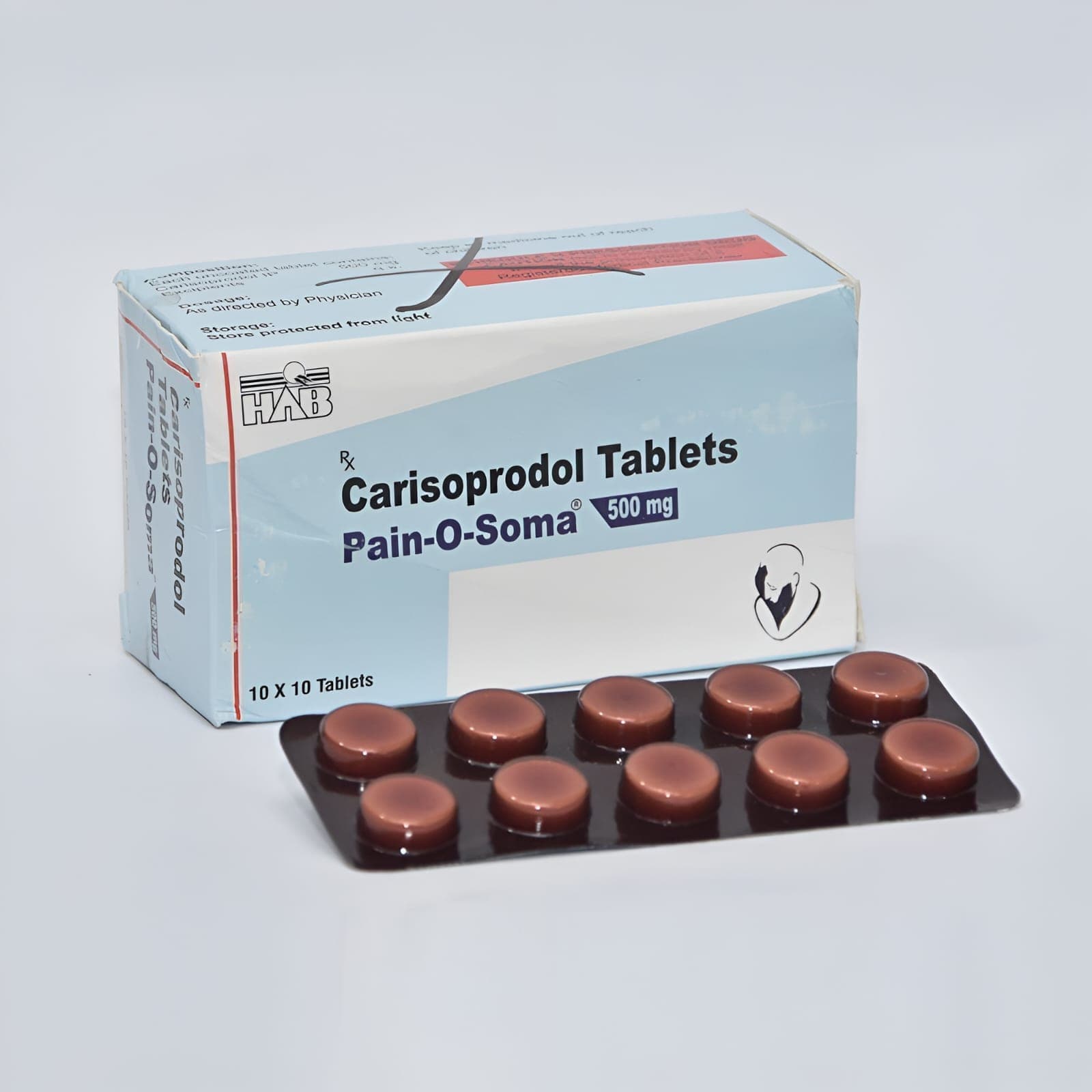
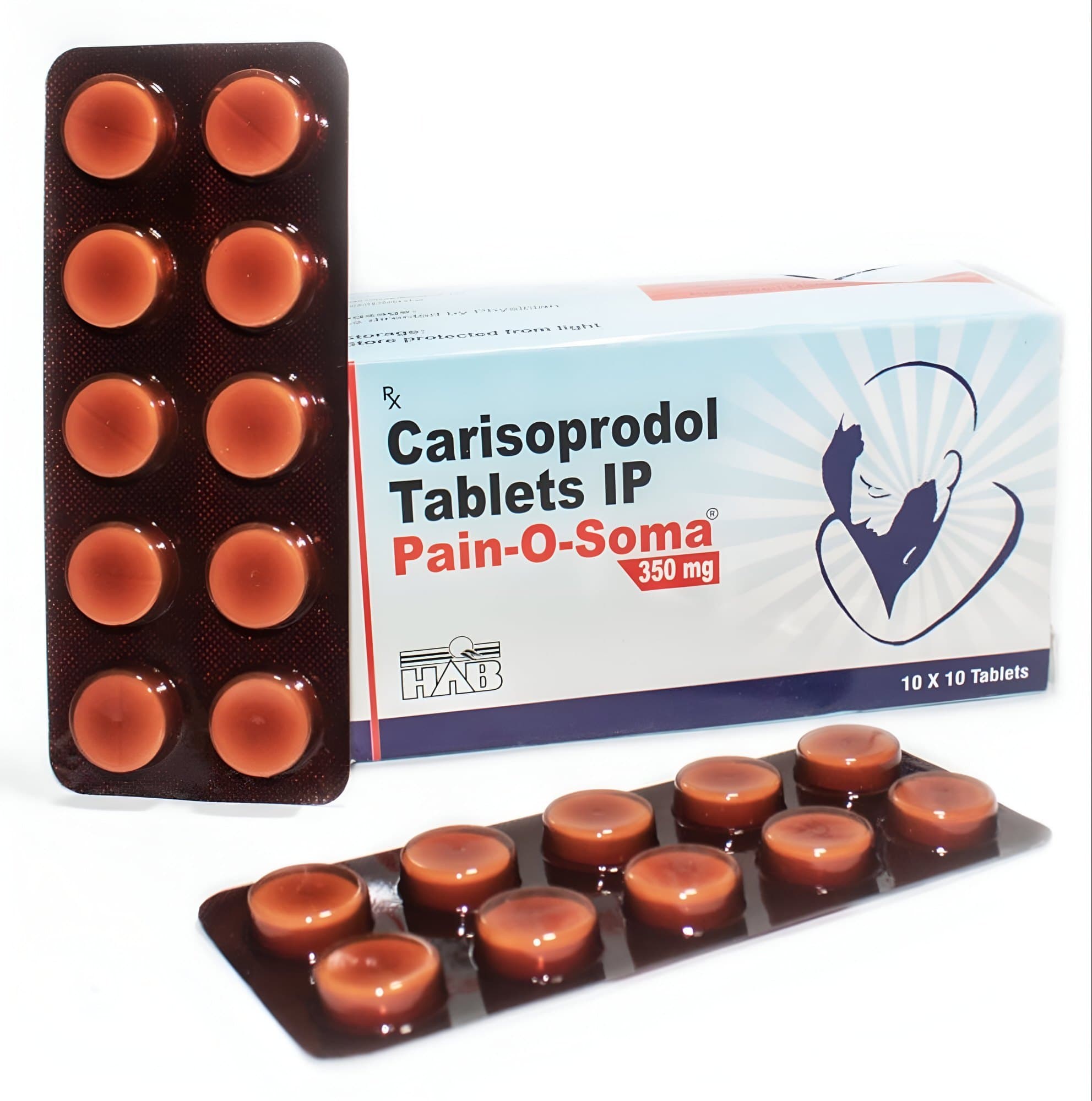
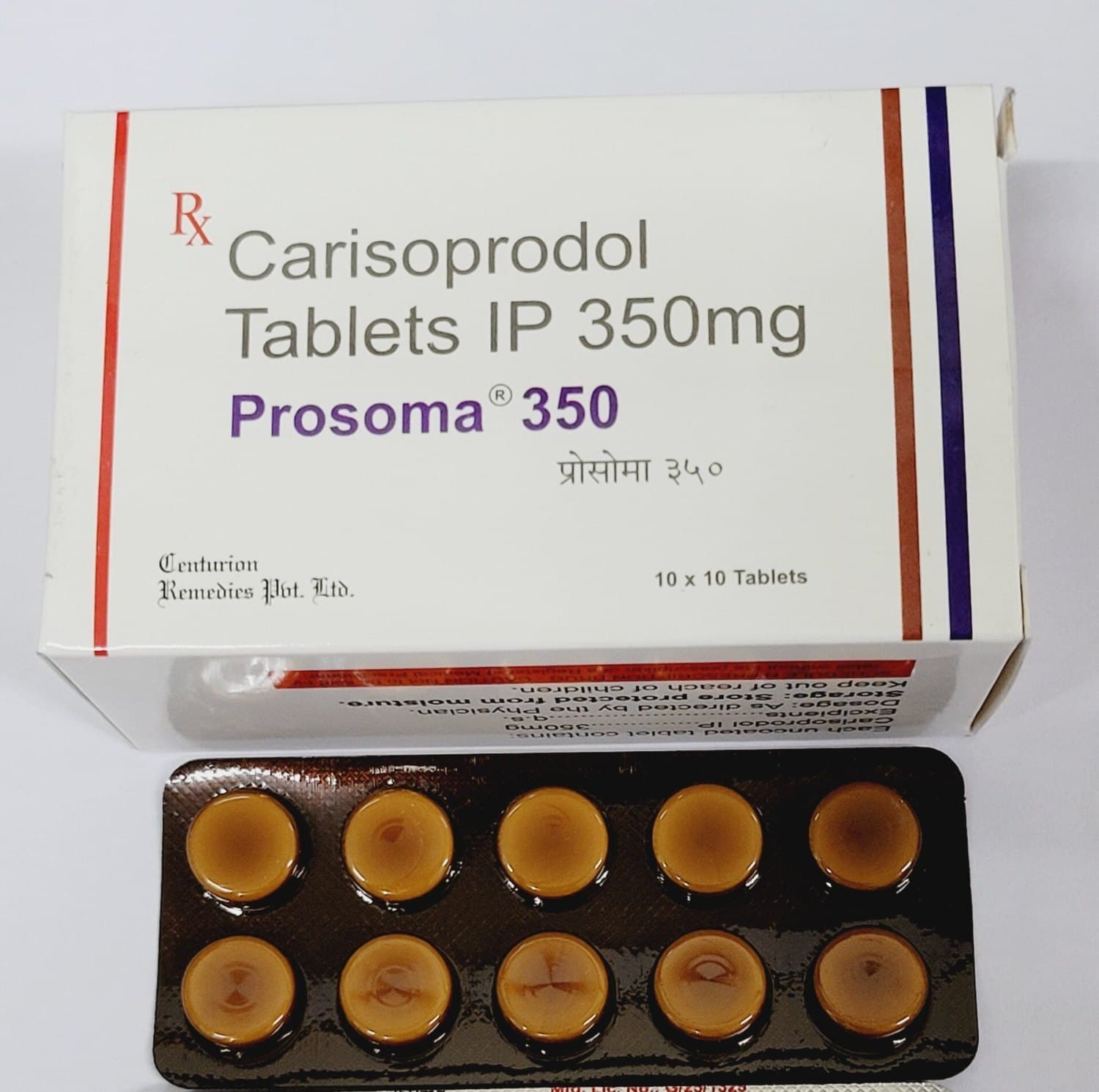
When a doctor does consider medicine appropriate, it is generally framed as support for the underlying plan rather than a replacement for it — easing symptoms enough to allow movement and physiotherapy to happen, rather than a stand-alone fix. Where a centrally acting muscle relaxant like carisoprodol is considered, that decision weighs the acute presentation against the dependence risk discussed in our guide to muscle relaxant dependence, and is generally kept to a short-term role. Products such as Carisoprodol 1000mg and Prosoma 350, listed in the pain relief category, are only appropriate where a prescriber has made that specific judgement for a specific patient.
Acute vs chronic: why the approach differs
Acute back pain — typically pain present for a matter of days to a few weeks — is managed differently from chronic pain that persists for months. Chronic pain usually needs a broader, often multidisciplinary approach: physiotherapy, sometimes psychological support, gradual reconditioning, and a longer-term management plan rather than reliance on any single medicine. If pain that started as an acute episode has not settled within a reasonable timeframe, that is itself a reason to go back to your GP rather than continue managing it the same way indefinitely.
The red flags are still the priority
Whatever the general approach, red-flag symptoms — numbness or weakness in a limb, loss of bladder or bowel control, fever, unexplained weight loss, or pain following significant trauma — override all of the above and need prompt medical assessment. Our guide on signs you might need a muscle relaxant covers this in more detail.
Building a plan with your GP
A useful appointment for back pain or muscle spasm usually results in more than a prescription: an assessment of severity and likely cause, practical advice on staying active, a referral to physiotherapy where appropriate, and — only where clinically justified — consideration of medicine as one part of the picture. Healthdirect Australia is a reliable place to read more about self-care and when to seek help for back pain.
Recovery is usually a process, not a single fix
Most acute episodes of back pain and muscle spasm improve gradually over days to a few weeks, with function returning before pain disappears entirely. Expecting a single appointment or a single medicine to resolve things immediately tends to set up disappointment; a more realistic frame is a short plan, reviewed and adjusted as you go, with movement and time doing much of the work alongside anything a doctor prescribes.
This article is general health information, not medical advice, and is not a substitute for professional assessment of your specific condition. Speak with your doctor or pharmacist.
Frequently asked questions
Is bed rest recommended for acute back pain?+
Generally no. Current guidance favours staying as active as pain allows over prolonged bed rest, which tends to slow recovery rather than help it.
Do I need a muscle relaxant to recover from back pain?+
Not necessarily. Many cases of acute back pain and muscle spasm improve with staying active, physiotherapy and simple self-care. A prescription muscle relaxant is only considered by a doctor in specific circumstances, and always requires a prescription.
When should chronic back pain be reassessed by a doctor?+
If pain that started as an acute episode has not settled within a reasonable period, or keeps recurring, it is worth returning to your GP rather than continuing to self-manage it the same way indefinitely.
Kamagra AUS Health Editorial Team
Plain-English health writing from our in-house editorial team — sourced to the TGA, healthdirect and each medicine's product information, and focused on how Australians actually access and use medicines safely.
How our content is written & reviewedRelated treatments
Browse the medicines and conditions related to this guide:
Mentioned in this guide
Shop the treatments covered here
Genuine medicines from the guide above — discreetly delivered Australia-wide.